Key Takeaways
- Kalonji (black seed, Nigella sativa) is one of the most valued traditional remedies for men’s daily strength and immunity.
- The usual traditional amount is half a teaspoon of seeds a day, often taken with honey or warm water.
- Kalonji is a nutritious food seed, not a medicine — it supports wellness but does not cure weakness or any disease.
- Men with ongoing weakness, low energy or fertility concerns should see a doctor to find the real cause.
What is kalonji?
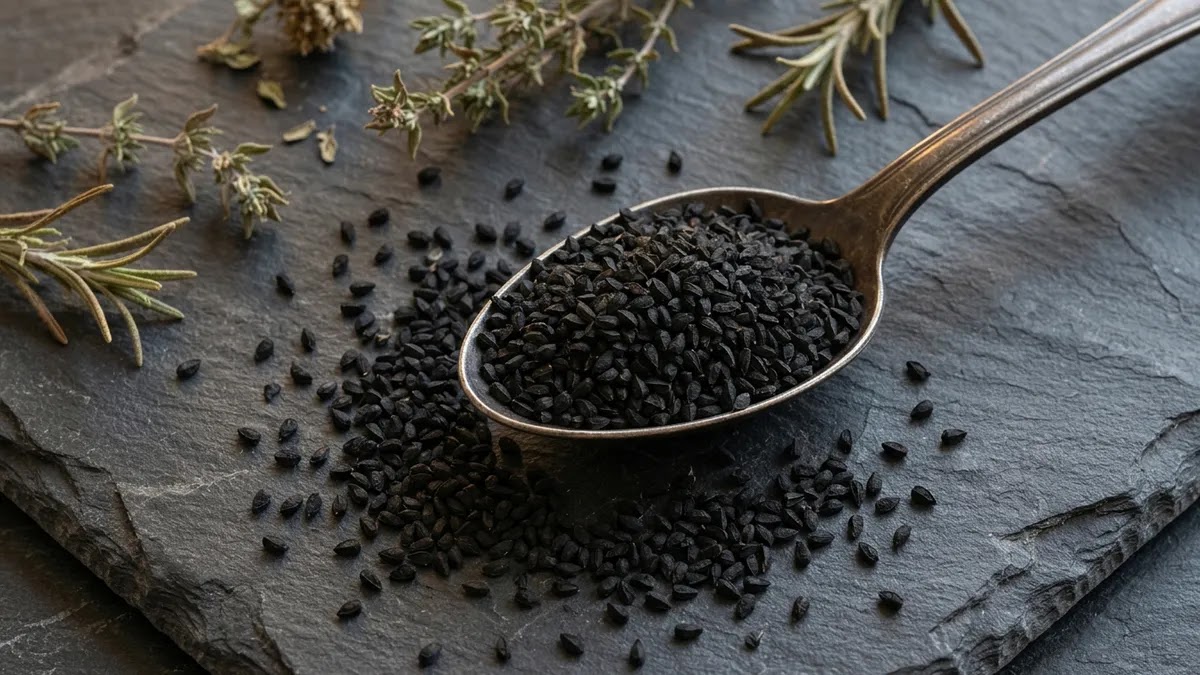
Kalonji, also called black seed or black cumin, comes from the Nigella sativa plant. The small black seeds have been used in traditional medicine across the Middle East and South Asia for centuries — a famous old saying calls black seed a remedy for everything except death, which reflects how highly tradition values it.
Nutritionally, kalonji contains healthy fats, antioxidants and a plant compound called thymoquinone, which researchers are studying for its protective effects. For men, kalonji is traditionally used as a daily strength and immunity seed.
Traditional benefits for men
Daily energy and strength. A small daily amount of kalonji with honey is a classic desi totka for men who feel run down. Its nutrients support general stamina as part of a balanced diet and proper sleep.
Immunity. Kalonji is rich in antioxidants. Traditional practice uses it through seasonal changes to support the body’s natural defenses.
Heart and cholesterol support. As part of a healthy diet, black seed is traditionally used to support normal cholesterol levels. It works alongside — never instead of — prescribed heart medicine.
Hair and beard. Kalonji oil is a popular traditional remedy for the scalp. Massaging a little oil into the scalp or beard is said to reduce dryness and keep hair looking thicker and healthier.
Digestion. A pinch of kalonji after heavy meals is traditionally used to ease gas and heaviness.
How to take kalonji
With honey (most common): Mix half a teaspoon of lightly crushed kalonji seeds with one teaspoon of raw honey. Take once a day, preferably in the morning.
With warm water: Swallow half a teaspoon of seeds with a glass of warm water after breakfast.
In food: Sprinkle seeds on bread, salads, yogurt or cooked vegetables. Light roasting improves the taste.
Kalonji oil for hair: Warm a few drops between your palms and massage into the scalp or beard. Leave for at least 30 minutes (or overnight) before washing.
How much is enough?
Half a teaspoon of seeds (about 1–2 grams) a day is the traditional amount for adults. If using kalonji oil by mouth, follow the product label and keep it to a few drops. Start small and stay consistent rather than taking large amounts.
Cautions
- Blood pressure and blood sugar: Kalonji may lower both slightly. If you take medicine for either, tell your doctor you are using it.
- Before surgery: Stop kalonji supplements at least two weeks before any planned surgery, as it can affect blood clotting.
- Stomach sensitivity: Large amounts can cause nausea or stomach upset.
- Quality matters: Buy seeds or cold-pressed oil from a trusted source; avoid products that promise miracle cures.
When to see a doctor
Persistent weakness, tiredness, low mood or fertility problems can have medical causes — thyroid, vitamin deficiency, diabetes, stress or other conditions. A doctor can test and treat the cause. Kalonji is a supportive food tradition, not a treatment for these problems.
FAQ
Can kalonji be taken daily?
Yes, half a teaspoon a day is the traditional routine for most healthy adults.
Is kalonji better as seeds or oil?
Both are traditional. Seeds are gentler for daily use; oil is stronger, so smaller amounts are used.
How long before I notice anything?
Traditional remedies work slowly. Give any routine at least 4–6 weeks alongside good food, exercise and sleep.
Disclaimer: This article shares traditional home-remedy knowledge for general information only. It is not medical advice and does not replace a doctor’s diagnosis or treatment.