

Key Takeaways
- Fenugreek (methi) seeds are a traditional home remedy used by women for period comfort, digestion, skin and hair.
- The most common method is methi water: soak one teaspoon of seeds overnight and drink the water in the morning.
- Fenugreek is a food, not a medicine — it supports general wellness but does not cure any condition.
- Pregnant women and anyone on blood-sugar medicine should talk to a doctor before using fenugreek regularly.
What is fenugreek?
Fenugreek, called methi in South Asian homes, is a small golden-brown seed with a slightly bitter, maple-like taste. It has been used in traditional cooking and home remedies for centuries. The seeds contain fiber, iron, magnesium and plant compounds that make them a nutritious addition to the diet.
For women, methi is best known as a kitchen remedy passed down by grandmothers — soaked seeds in the morning, methi tea during periods, and seed paste for hair. Below is what tradition says, how to use it, and where to be careful.
Traditional benefits for women
Period comfort. Methi water is traditionally taken during periods to ease discomfort and bloating. Many women find the warm routine soothing, though it is a comfort measure, not a treatment for period disorders.
Digestion and bloating. The fiber in fenugreek seeds supports digestion. Soaked seeds are traditionally used to reduce heaviness after meals and to keep the stomach settled.
Skin and hair. Fenugreek paste made from soaked, ground seeds is a classic home treatment for dull hair and dandruff-prone scalps. The seeds’ natural mucilage conditions hair and makes it feel softer.
Blood sugar support. Fenugreek fiber slows the absorption of sugar from food, which is why methi is popular in traditional diets for people watching their blood sugar. This is a dietary support only — it never replaces diabetes medicine.
After childbirth (traditional use). In many cultures, methi is given to new mothers in foods like laddoos to support strength and milk flow. Because every mother’s situation is different, this should only be done with a doctor’s or midwife’s knowledge.
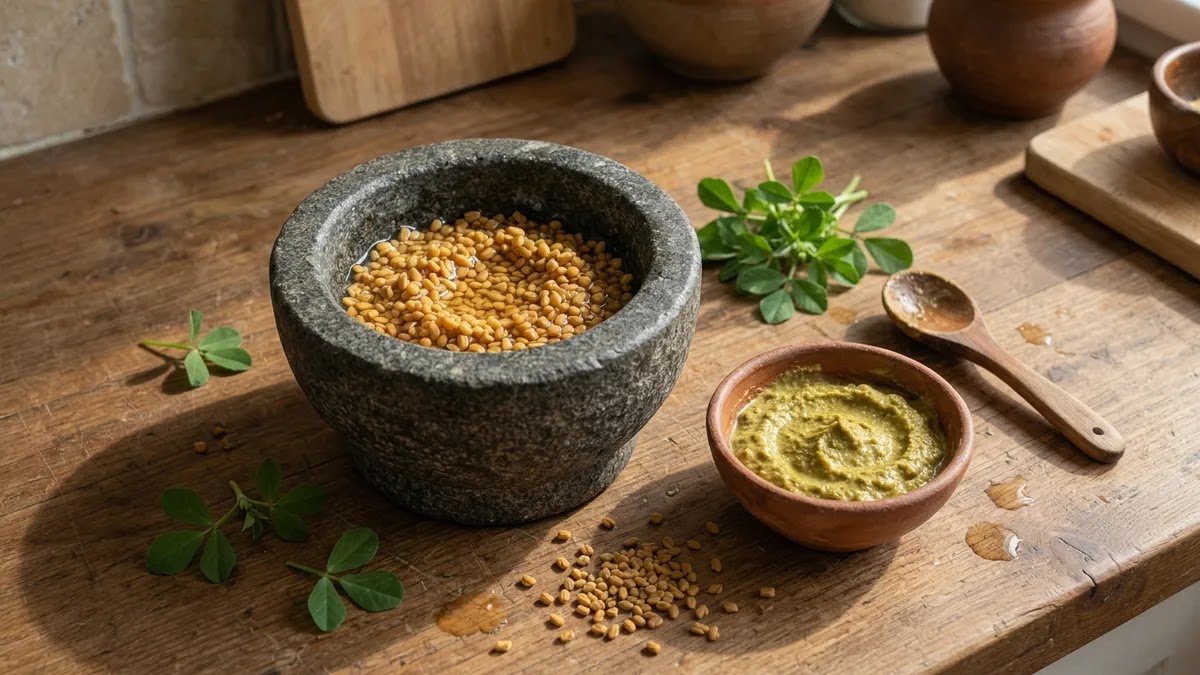
How to make methi water
- Take 1 teaspoon of fenugreek seeds and wash them once.
- Soak them in a glass of clean water overnight (8–10 hours).
- In the morning, strain and drink the water on an empty stomach.
- The softened seeds can be chewed or added to food — do not waste them.
For methi tea instead: boil 1 teaspoon of seeds in 2 cups of water for 5 minutes, strain, and sip warm. A little honey can be added once it cools slightly.
For hair: soak 2 tablespoons of seeds overnight, grind them into a smooth paste, apply to the scalp for 30 minutes, then wash with a mild shampoo.
How much and how often?
Traditionally, one glass of methi water a day is enough. Start with half a teaspoon of seeds if you are new to it, and give your body a week to adjust. More is not better — too much fenugreek can upset the stomach.
Cautions
- Pregnancy: Avoid medicinal amounts of fenugreek during pregnancy unless your doctor says otherwise; it is traditionally believed to stimulate the uterus.
- Blood sugar medicine: Fenugreek can lower blood sugar. If you take diabetes medicine, monitor your levels and inform your doctor.
- Allergy: People allergic to peanuts, chickpeas or soy may also react to fenugreek.
- Digestion: Large amounts can cause gas, loose stools or a maple-like body odor. This is harmless but a sign to reduce the amount.
When to see a doctor
See a doctor if periods are very painful, very heavy or irregular for months, if you have symptoms of diabetes, or if any home remedy gives you a reaction. Home remedies support everyday wellness; they do not diagnose or treat disease.
FAQ
Can I drink methi water every day?
Yes, one glass a day is the traditional routine for most healthy adults. Take a break if it upsets your stomach.
Does fenugreek help with weight?
Its fiber can help you feel full, which may support a balanced diet, but fenugreek alone does not cause weight loss.
Can I use methi water during periods?
Many women traditionally do, for comfort. If your period pain is severe or unusual, see a doctor instead of relying on home remedies.
Disclaimer: This article shares traditional home-remedy knowledge for general information only. It is not medical advice and does not replace a doctor’s diagnosis or treatment.