Key Takeaways
- Ginger tea is one of the most widely used traditional home remedies for period pain and cramps.
- Make it by simmering fresh ginger slices in water for 10 minutes; drink 2–3 cups a day during your period.
- Some studies suggest ginger can ease cramp pain for some women, but it is a comfort remedy, not a treatment.
- Severe, worsening or unusual period pain needs a doctor — do not rely on home remedies alone.
Why ginger?
Ginger has been used for centuries in Asian and South Asian home medicine as a warming remedy for pain, nausea and cold stomachs. For periods, grandmothers traditionally serve adrak (ginger) tea or ginger boiled in milk to ease cramps and the heavy, dragging feeling many women get in the first days of their cycle.
Modern research is beginning to catch up with tradition: several small studies have found that ginger may reduce period pain for some women, possibly because of its natural anti-inflammatory compounds, called gingerols. The evidence is promising but not final — which is exactly why ginger tea belongs in the “comfort and support” category, not the “cure” category.
How to make ginger tea for period pain
- Take a 1-inch piece of fresh ginger, wash it and slice it thinly (no need to peel).
- Add the slices to 2 cups of water and bring to a boil.
- Lower the heat and simmer for 10 minutes so the water turns golden and spicy.
- Strain into a cup. Add honey and a squeeze of lemon once it cools slightly, if you like.
- Sip it warm and slowly.
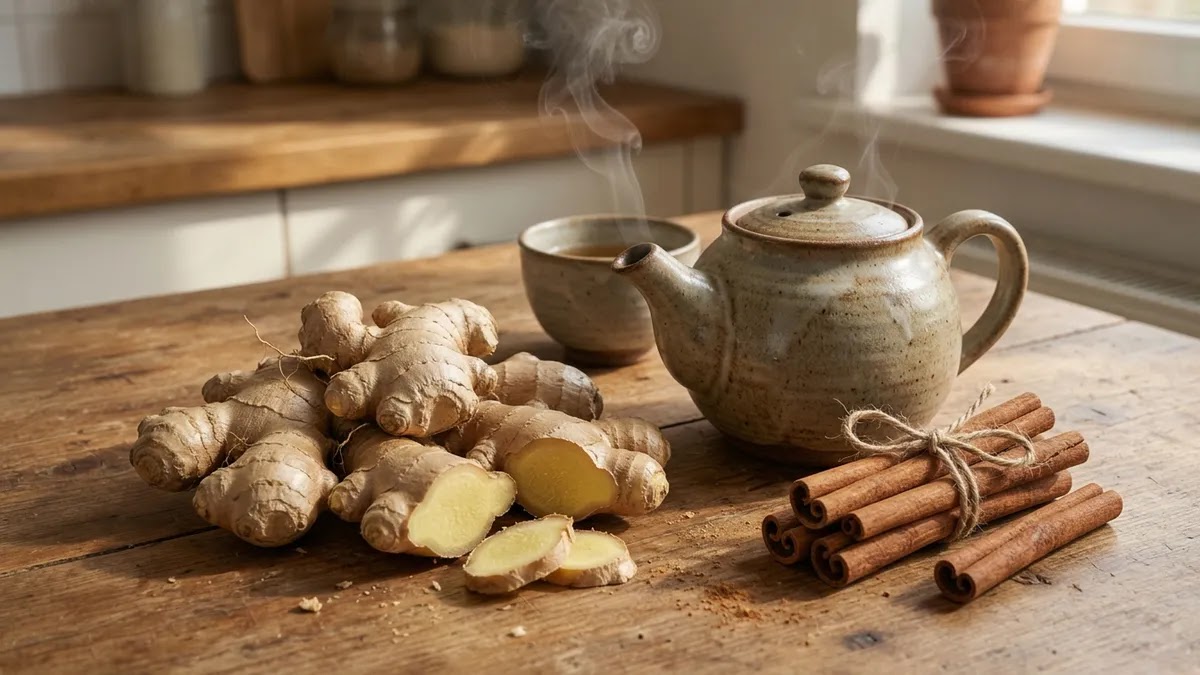
Stronger traditional version: Add 2–3 crushed cardamom pods or a small cinnamon stick while simmering for extra warmth and flavour.
When and how much to drink
- Start a day before your period is due, or as soon as cramps begin.
- Drink 2–3 cups a day during the painful days.
- Warmth itself helps many women — a hot water bottle on the lower belly alongside the tea is a classic combination.
Other traditional uses of ginger for women
- Nausea: Ginger tea is traditionally sipped for queasiness and travel sickness.
- Bloating: A cup after meals is used to settle gas and heaviness.
- Cold and sore throat: Ginger with honey is a standard home drink in winter.
Cautions
- Blood-thinning medicine: Ginger can mildly affect blood clotting. If you take blood thinners, ask your doctor before using ginger daily in strong amounts.
- Heartburn: Strong ginger tea can irritate an empty or sensitive stomach. Take it after a light snack if needed.
- Pregnancy: Small amounts in food are generally considered fine, but strong daily ginger remedies during pregnancy should only be used with a doctor’s approval.
- Gallstones: People with gallbladder problems should check with a doctor before regular ginger use.
When to see a doctor
See a doctor if period pain is severe, getting worse over time, starts suddenly after years of painless periods, comes with very heavy bleeding, fever or fainting, or stops you from working and living normally. These can be signs of conditions like endometriosis or fibroids, which need proper diagnosis and treatment.
FAQ
How fast does ginger tea work?
Most women who find it helpful feel warmth and easing within 30–60 minutes. It works best when started early, at the first sign of cramps.
Can I use dried ginger powder instead of fresh?
Yes. Use half a teaspoon of dried ginger powder per cup of hot water, steeped for 5–10 minutes. Fresh ginger tastes better and is the traditional choice.
Can I drink ginger tea every day, all month?
A cup a day is fine for most healthy adults, but for period pain it is mainly needed around your cycle days.
Disclaimer: This article shares traditional home-remedy knowledge for general information only. It is not medical advice and does not replace a doctor’s diagnosis or treatment.
Notices (2)
**Try our New Beta Features**: Create a more engaging reading experience with the help of Google
Google Search previews: Easily insert visual Google Search previews for popular people, locations, pop-culture and more directly in your blog! In Compose View, look for the ‘G’ button in the editor tool bar to get started.
**Try our New Beta Features**: Create a more engaging reading experience with the help of Google
Google Maps Widget: Enrich your blog content by easily embedding interactive place details such as location, opening hours, photos, and reviews directly into your posts. In Compose View, look for the ‘Map’ icon on the toolbar to get started.
Title
Preview
Publish
Compose view
1
Key Takeaways
- Ginger tea is one of the most widely used traditional home remedies for period pain and cramps.
- Make it by simmering fresh ginger slices in water for 10 minutes; drink 2–3 cups a day during your period.
- Some studies suggest ginger can ease cramp pain for some women, but it is a comfort remedy, not a treatment.
- Severe, worsening or unusual period pain needs a doctor — do not rely on home remedies alone.
Why ginger?
Ginger has been used for centuries in Asian and South Asian home medicine as a warming remedy for pain, nausea and cold stomachs. For periods, grandmothers traditionally serve adrak (ginger) tea or ginger boiled in milk to ease cramps and the heavy, dragging feeling many women get in the first days of their cycle.
Modern research is beginning to catch up with tradition: several small studies have found that ginger may reduce period pain for some women, possibly because of its natural anti-inflammatory compounds, called gingerols. The evidence is promising but not final — which is exactly why ginger tea belongs in the “comfort and support” category, not the “cure” category.
How to make ginger tea for period pain
- Take a 1-inch piece of fresh ginger, wash it and slice it thinly (no need to peel).
- Add the slices to 2 cups of water and bring to a boil.
- Lower the heat and simmer for 10 minutes so the water turns golden and spicy.
- Strain into a cup. Add honey and a squeeze of lemon once it cools slightly, if you like.
- Sip it warm and slowly.
Stronger traditional version: Add 2–3 crushed cardamom pods or a small cinnamon stick while simmering for extra warmth and flavour.
When and how much to drink
- Start a day before your period is due, or as soon as cramps begin.
- Drink 2–3 cups a day during the painful days.
- Warmth itself helps many women — a hot water bottle on the lower belly alongside the tea is a classic combination.
Other traditional uses of ginger for women
- Nausea: Ginger tea is traditionally sipped for queasiness and travel sickness.
- Bloating: A cup after meals is used to settle gas and heaviness.
- Cold and sore throat: Ginger with honey is a standard home drink in winter.
Cautions
- Blood-thinning medicine: Ginger can mildly affect blood clotting. If you take blood thinners, ask your doctor before using ginger daily in strong amounts.
- Heartburn: Strong ginger tea can irritate an empty or sensitive stomach. Take it after a light snack if needed.
- Pregnancy: Small amounts in food are generally considered fine, but strong daily ginger remedies during pregnancy should only be used with a doctor’s approval.
- Gallstones: People with gallbladder problems should check with a doctor before regular ginger use.
When to see a doctor
See a doctor if period pain is severe, getting worse over time, starts suddenly after years of painless periods, comes with very heavy bleeding, fever or fainting, or stops you from working and living normally. These can be signs of conditions like endometriosis or fibroids, which need proper diagnosis and treatment.
FAQ
How fast does ginger tea work?
Most women who find it helpful feel warmth and easing within 30–60 minutes. It works best when started early, at the first sign of cramps.
Can I use dried ginger powder instead of fresh?
Yes. Use half a teaspoon of dried ginger powder per cup of hot water, steeped for 5–10 minutes. Fresh ginger tastes better and is the traditional choice.
Can I drink ginger tea every day, all month?
A cup a day is fine for most healthy adults, but for period pain it is mainly needed around your cycle days.
Disclaimer: This article shares traditional home-remedy knowledge for general information only. It is not medical advice and does not replace a doctor’s diagnosis or treatment.