Key Takeaways
- Fennel seeds (saunf) are the classic South Asian after-meal remedy for bloating, gas and heaviness.
- Chewing half a teaspoon after meals is the traditional way; fennel tea works too.
- Fennel’s natural oils help relax the digestive tract, which is why the habit has survived for centuries.
- Bloating that is constant, painful or comes with other symptoms needs a doctor, not just saunf.
The tradition behind the habit
In homes and restaurants across South Asia, a small bowl of fennel seeds appears at the end of a meal. This is not just a mouth freshener — it is one of the oldest digestive remedies in the region. Ayurvedic and Unani traditions both classify saunf as a carminative: a food that helps move gas through the digestive system and settles the stomach.
Modern interest matches the tradition. Fennel seeds contain anethole and other aromatic oils that are studied for their relaxing effect on the gut. That is why fennel appears in many herbal digestive teas around the world.
How fennel seeds help digestion
Bloating and gas. The volatile oils in fennel help the digestive tract relax, making it easier for trapped gas to pass instead of building up as pressure and bloating.
Heaviness after rich food. Chewing saunf stimulates saliva and digestive juices, which is why a heavy, oily meal feels lighter after a pinch of seeds.
Mild acidity comfort. Fennel tea is traditionally sipped when the stomach feels hot or unsettled after spicy food.
Fresh breath. The same aromatic oils that help the gut also freshen the mouth — a practical bonus after meals with onion and garlic.
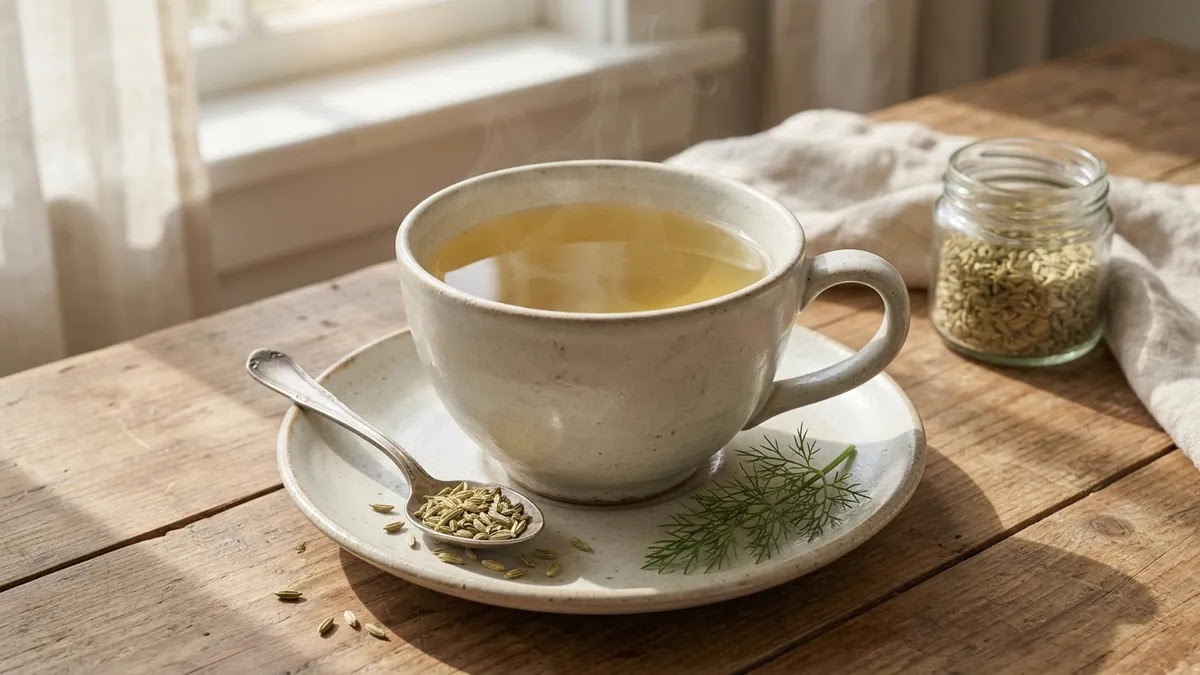
Three ways to use fennel seeds
1. Chew them (the classic way)
Chew half a teaspoon of plain or lightly roasted fennel seeds slowly after lunch and dinner. Swallow the seeds once they soften.
2. Fennel tea
Crush 1 teaspoon of seeds lightly, add to a cup of hot water, cover and steep for 10 minutes. Strain and sip after meals or whenever bloating strikes.
3. Saunf water
Soak 1 teaspoon of seeds in a glass of water overnight. Drink the water in the morning for a gentle daily digestive routine.
Plain seeds are best. The sugar-coated colourful saunf sold as mouth freshener adds sugar you do not need every day.
How much and how often?
Half a teaspoon after main meals is the traditional amount — about 1 teaspoon a day in total. For tea, 1–2 cups a day is plenty. Like all remedies, consistency beats quantity.
Cautions
- Pregnancy: Normal food amounts are fine, but strong medicinal use of fennel (concentrated tea all day, fennel oil) should be avoided in pregnancy unless a doctor approves.
- Allergy: People allergic to celery, carrot or mugwort can sometimes react to fennel, as they are in the same plant family.
- Fennel oil: Never swallow concentrated fennel essential oil unless a qualified practitioner directs it. The seeds and tea are the safe home forms.
- Medicine: If you take daily prescription medicine and plan to drink strong fennel tea every day, mention it to your doctor.
When to see a doctor
Bloating that never goes away, strong stomach pain, vomiting, blood in stool, unexplained weight loss, or difficulty swallowing are warning signs. See a doctor promptly — these need diagnosis, not home remedies.
FAQ
Can I eat fennel seeds every day?
Yes, half a teaspoon after meals is a safe traditional daily habit for most healthy adults.
Does saunf help with acidity?
Many people find fennel tea soothing after spicy meals. If acidity is frequent, a doctor should check for reflux or other causes.
Roasted or raw saunf — which is better for digestion?
Both work. Lightly roasted seeds taste better and are easier to chew; raw seeds keep slightly more of their natural oils.
Disclaimer: This article shares traditional home-remedy knowledge for general information only. It is not medical advice and does not replace a doctor’s diagnosis or treatment.