
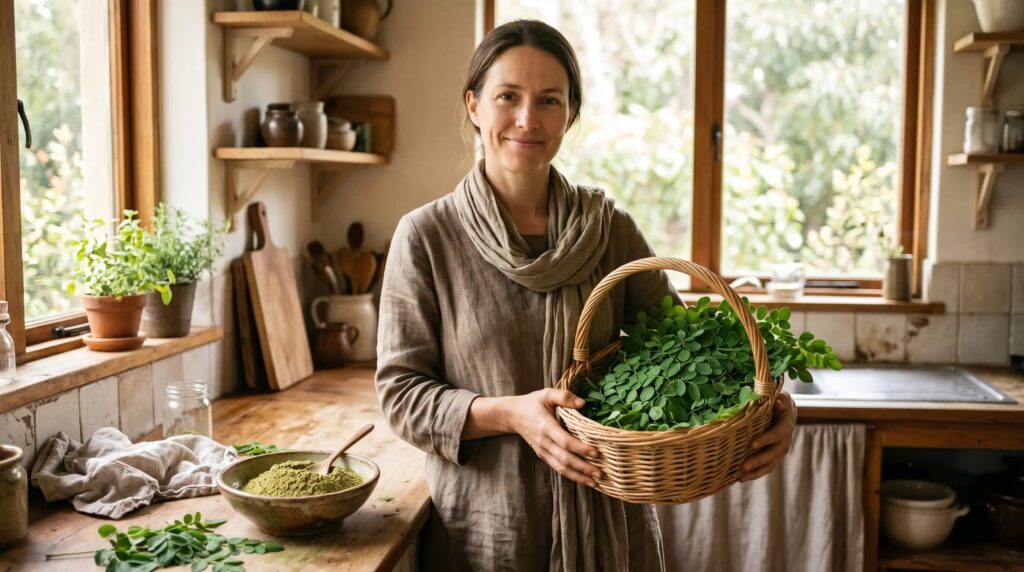
Moringa, often called the drumstick tree or “miracle tree”, grows widely across South Asia and Africa. Its small green leaves have been eaten as a vegetable and used as a traditional remedy for generations — and modern nutrition has caught up, calling moringa one of the most nutrient-rich plants available.
Moringa leaves are rich in iron, calcium, vitamin A, and vitamin C, which is why they are traditionally valued for women’s health — for energy, blood health, hair, and skin. It is a food-based remedy that may support general health — not a medicine and not a cure for any condition.
Key Takeaways
- Moringa leaves are rich in iron, calcium, vitamins A and C.
- They are traditionally valued for women’s energy, blood health, hair, and skin.
- Moringa powder or fresh leaves in food are the usual ways to use it.
- It supports health but does not replace iron medicine or a doctor’s care.
What It Is
Moringa oleifera is a fast-growing tree whose leaves, pods, and seeds are all eaten. The leaves can be cooked fresh like spinach, dried and ground into a green powder, or brewed as tea. In traditional medicine, moringa is valued as a nourishing food for women — especially for tiredness, low iron, and hair and skin health.
Its iron and vitamin C combination is particularly useful, since vitamin C helps the body absorb iron. This is one reason moringa has become popular as a daily supplement in powder form, added to smoothies, yogurt, or warm water.
Traditional Benefits for Women
Iron and energy: Low iron is one of the most common causes of tiredness in women. Moringa leaves are a plant source of iron, and their vitamin C helps the body use it — a traditional support for energy and healthy blood.
Hair and skin: Moringa’s vitamins A and E and its amino acids are valued for healthy hair and glowing skin. Women traditionally use moringa powder in hair masks and eat the leaves for skin health. For more on natural hair care, see our article on amla benefits for hair fall.
Bone health: Moringa is rich in calcium and magnesium, nutrients that support strong bones — important for women as they grow older.
Hormonal balance: In traditional practice, moringa is used to support women’s general health and regular cycles, alongside a balanced diet. It is not a treatment for PCOS or hormonal disorders — see our article on natural remedies for PCOS for more on that topic.
How to Use Moringa
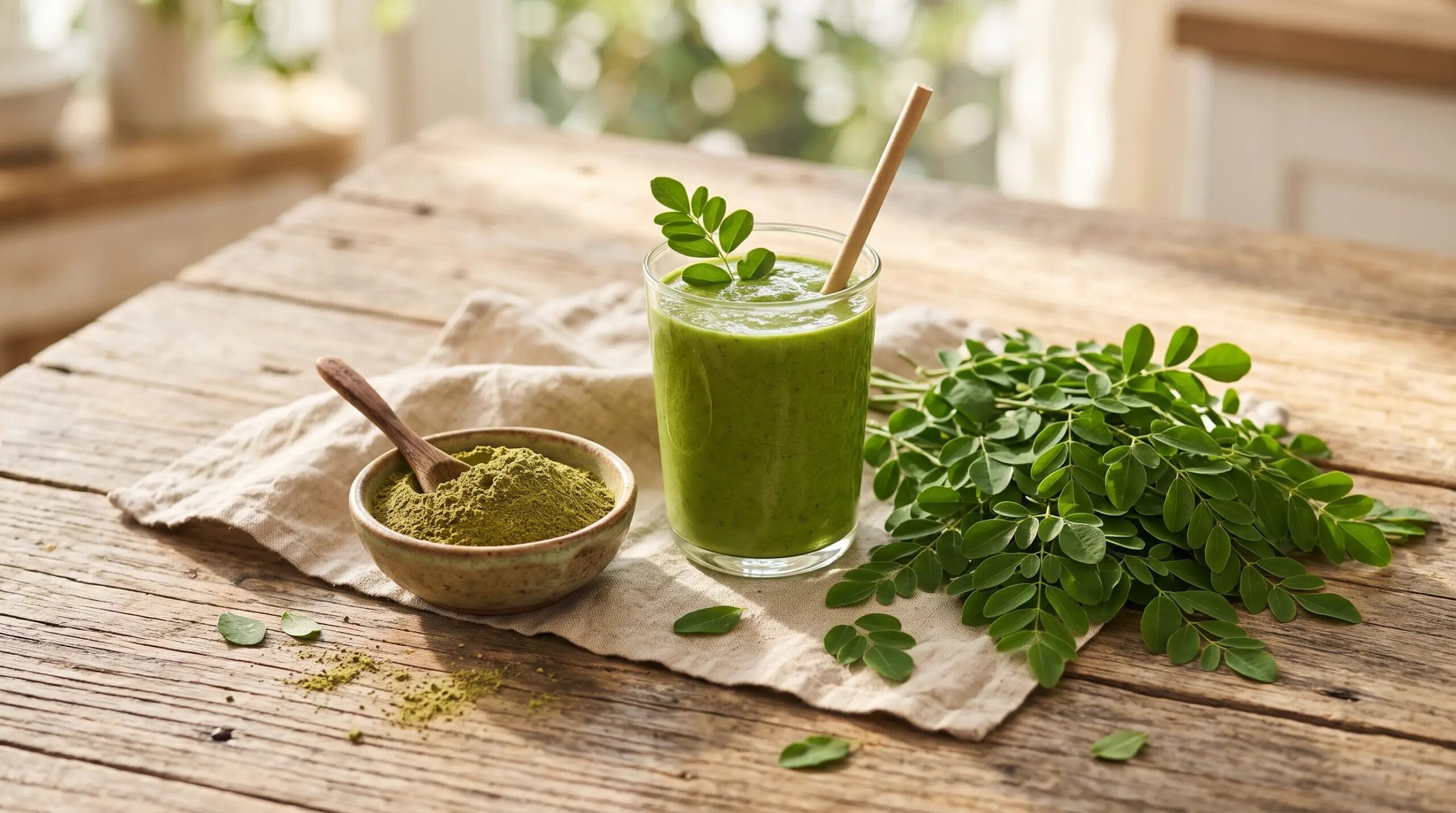
Moringa powder: Stir half to one teaspoon of moringa leaf powder into water, milk, yogurt, or a smoothie once a day. Start with a small amount and increase slowly.
Fresh leaves: Cook fresh moringa leaves like spinach — in lentils, soups, or stir-fries — two or three times a week.
Moringa tea: Steep a teaspoon of dried leaves in hot water for 5 minutes, strain, and drink. Add lemon or honey for taste.
Cautions
- Start with a small dose — too much moringa can cause stomach upset or loose motions.
- Pregnant women should check with a doctor before using moringa powder or supplements.
- Moringa may lower blood sugar and blood pressure, so people on medicine for these should be careful.
- Buy powder from a trusted source; cheap, dull-coloured powder may be mixed with other leaves.
When to See a Doctor
See a doctor if tiredness, heavy periods, hair fall, or pale skin continue for weeks. These can be signs of anaemia, thyroid problems, or hormonal conditions that need blood tests and proper treatment. Moringa supports health, but it is not a replacement for iron tablets or medical care when they are needed.
FAQ
How much moringa powder should I take daily?
Half to one teaspoon a day is the usual traditional amount. Start small and increase slowly if your stomach is comfortable.
Can moringa help with anaemia?
Moringa contains iron and vitamin C, which support healthy blood, but it cannot replace iron medicine for diagnosed anaemia. A doctor should check low iron levels.
Is moringa safe during breastfeeding?
Moringa leaves as food are traditionally used by breastfeeding mothers in South Asia, but supplements and powders should be discussed with a doctor first.
Related Reading
Disclaimer: This article is for general information only and is not medical advice. Moringa is a traditional food-based remedy, not a medicine or a cure for any condition. Always consult a qualified doctor before use, especially if you are pregnant, breastfeeding, have a medical condition, or take medication.